


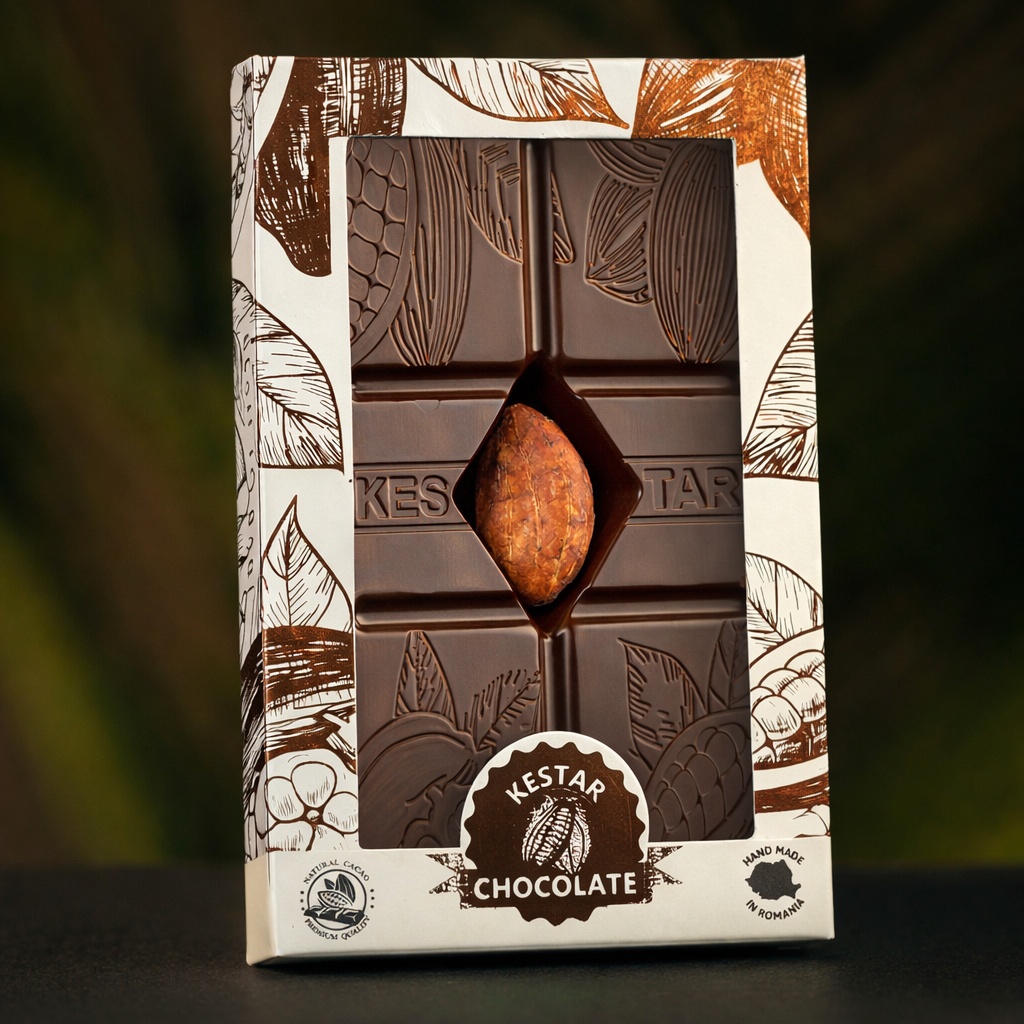
Artisanal Bean to Bar Chocolate - Milk & Coffee

Description
Aroma Profile: Coffee, cherry liqueur, apricot jam with candied apricot kernel notes, linden flower honey, and melon.
Bean to Bar chocolate made without artificial flavors, added cocoa butter, or any other ingredients that could alter the natural aromas already present in the cocoa beans.
What does Bean to Bar mean?
Bean to Bar chocolate is different from conventional chocolate because every stage of production — from transforming raw cocoa beans into a refined, delicious chocolate ready to enjoy — takes place in the same facility. By controlling the entire process, especially the roasting of the raw cocoa beans, we are able to discover and reveal surprising layers of flavor.
Ingredients? Nothing complicated.
We are tired of reading endless lists on nutritional labels, so we have chosen to use only carefully selected ingredients:
- Cocoa beans from Indonesia, Ghaura Estate
- Unrefined cane sugar
- Cocoa butter
- Whole milk powder, 26% fat
- Specialty coffee – Colombia, Finca Monteblanco (contains a small amount of caffeine)
What does this mean?
It means that the aromas and flavor notes found in this chocolate are created by the natural character of the cocoa bean and the careful craftsmanship behind each step of production. Every stage of manufacturing influences the final taste, which is why we develop and refine unique profiles for each origin, highlighting the extraordinary flavors naturally present in the cocoa beans.
Fun fact: The Latin name of the cacao tree, Theobroma cacao, translates as “Food of the Gods”.
The roasting of cocoa beans: a sensual science
When artisan chocolate reaches its highest expression, the chemistry taking place inside roasted cocoa beans can be experienced through all five senses.
Raw cocoa beans begin with an astringent and often intense flavor, with bitter nutty notes created by volatile acids developed during fermentation.
But everything changes once the cocoa beans are roasted.
The Maillard reaction occurs as amino acids and natural sugars react, transforming into a wide range of new aromatic compounds. This process deepens the naturally rich brown color developed during fermentation while replacing sharp acidic aromas with the first delicate waves of warm chocolate fragrance.
As the temperature rises, excess moisture evaporates from the cocoa beans, creating a series of satisfying cracks that indicate the beans are approaching the ideal roasting point.
Once the artisan chocolatier is satisfied with the roast, the reaction must be quickly stopped by cooling the beans to room temperature. Cooling racks, fans, and controlled air systems are often used to achieve the best results.
Once cool enough to handle, the whole cocoa beans become fragile and easy to break apart. The outer shells separate naturally, revealing the precious cocoa nibs inside.
Then comes the ultimate test: tasting. Many chocolate makers take the opportunity to evaluate their creation themselves — one of the true pleasures of the craft.
Discovering the perfect roast
There is no single way to roast cocoa beans.
While industrial chocolate producers often use a standardized roasting approach, artisan chocolatiers understand that every batch of beans is unique, and therefore every roast should be carefully adapted.
An artisan chocolate maker adjusts the roasting process according to each lot, taking into consideration the variety, origin, moisture level, and size of the beans. Damaged beans are removed, and the beans are sorted to ensure an even roast and optimal flavor development.
They must also decide whether to separate the cocoa nibs from the shell before or after roasting. While large-scale producers often roast only the inner nibs, artisan chocolate makers commonly roast whole beans, allowing the nibs to absorb additional aromatic complexity from the surrounding shell.
A “perfect” roast can be achieved using different heat sources, including ovens, drum roasters, stovetop pans, hot air guns, or even coffee roasters. Some methods, such as drum roasting, may provide greater consistency, but in skilled hands there is no single best equipment choice.
A cacao tree requires approximately five years to fully mature and begin flowering.
Remember to let the chocolate melt slowly in your mouth and breathe: around 20% of flavor perception comes from the tongue, while approximately 80% comes from the sense of smell. The second bite clears the initial impression and allows the more delicate flavor notes to reveal themselves with greater clarity.
Our chocolates are handcrafted from start to finish — from processing the cocoa beans to wrapping, packaging, and creating each label by hand.