




Artisanal Chocolate Bean to Bar - PERU Marahua San Martin

Description
Flavor Profile
A sweet and delicate freshness of apricot and sour cherry, followed by honey and almond notes. The texture is smooth and creamy, reminiscent of whipped cream, with a bright citrusy aftertaste of mandarin, complemented by subtle spiced notes of nutmeg.
Bean-to-Bar Chocolate – PERU Marahua, San Martín
Two Ingredients
70% cacao beans from PERU – Marahua, San Martín
30% unrefined granulated coconut blossom nectar
Our Bean-to-Bar chocolate contains no artificial flavors, added cocoa butter, or any other ingredients intended to alter the natural aromas already present in the cacao beans.
What does “Bean-to-Bar” mean?
Bean-to-Bar chocolate stands apart from conventional chocolate because every stage of production—from transforming raw cacao beans into a refined, ready-to-enjoy chocolate—takes place in the same facility.
This allows us to maintain complete control over the roasting process and carefully develop the unique characteristics of each cacao origin, revealing surprising and naturally occurring flavor notes.
Origin? We go all the way to the farm.
This chocolate is not simply single origin, made from cacao beans sourced somewhere in Peru.
Our cacao beans are carefully selected directly from the Marahua region of San Martín, Peru.
We name our chocolates after the specific farms or growing regions where the cacao originates because transparency and traceability are essential to us. We believe you should know exactly where the ingredients in your chocolate come from.
Ingredients? Nothing could be simpler.
We were tired of reading novels on nutritional labels, so we chose to use only two ingredients:
- 70% cacao beans, originating from Marahua, San Martín, Peru
- 30% unrefined coconut blossom nectar, sourced from Indonesia
What does this mean?
It means that the aromas and flavor notes found in this chocolate come primarily from the cacao bean itself. Throughout the manufacturing process, every step influences the final flavor profile.
We carefully develop and refine individual roasting and production profiles for each origin, allowing the extraordinary aromas naturally present in the cacao beans to shine.
Unrefined Coconut Blossom Nectar
Our granulated coconut blossom nectar is unrefined and contains no unnecessary additives.
It is obtained from the sap of coconut palm blossoms, which undergoes a gentle heating process that evaporates the water, leaving behind a solid mass.
The final product is brown and naturally granulated, somewhat similar in appearance to raw cane sugar, but with a naturally distinctive flavor profile.
Roasting Cacao Beans – A Sensory Science
At its finest, artisanal chocolate making is a sensory experience. The chemistry taking place inside roasting cacao beans can be detected through all five senses.
Raw cacao beans initially have an astringent and often unpleasant taste, with bitter and nutty notes resulting from volatile acids created during fermentation.
But everything changes once the cacao beans are roasted.
The Maillard reaction takes place as amino acids and sugars react, creating a wide range of new aromatic compounds. The beans develop a deeper, richer color, while their aromas become increasingly complex.
Meanwhile, the sharp, acidic smell reminiscent of boiling vinegar gradually gives way to the first enticing aromas of warm, freshly roasted chocolate.
As the temperature rises, excess moisture escapes from the cacao beans with a series of satisfying cracks and snaps—an indication that the roasting process is approaching its final stage.
Once the artisan chocolatier is satisfied with the roast, the reaction must be stopped quickly by cooling the beans back to room temperature. Cooling racks, fans and controlled airflow are often used to achieve the desired result.
Once sufficiently cool, the whole cacao beans become brittle enough to be broken apart. The outer husks separate easily, revealing the precious cacao nib inside.
And then comes the ultimate test: tasting.
For many artisan chocolate makers, this is one of the most rewarding parts of the craft—the opportunity to taste the result of their work and determine whether the roast has achieved its intended profile.
Discovering the Perfect Roast
There is no single way to roast cacao beans.
While mass-market chocolate manufacturers often rely on standardized roasting profiles, artisan chocolate makers understand that no two lots of cacao are exactly alike. Therefore, the roasting process should be adapted accordingly.
An artisan chocolatier will adjust the roast according to the origin, genetics and characteristics of the beans, taking into consideration factors such as moisture content, bean size and quality.
Damaged beans are removed and the beans are sorted by size to achieve a more uniform roast and optimize flavor development.
The chocolatier must also determine whether the cacao nib should be separated from the husk before or after roasting.
While large-scale manufacturers often roast only the cacao nib, artisan chocolate makers may roast the whole bean, allowing the nib to develop additional aromatic complexity during the roasting process.
A “perfect” roast can be achieved using many different heat sources, including ovens, drum roasters, stovetop pans, hot-air guns and even coffee roasters.
Some methods, such as drum roasting, can provide greater consistency, but in the hands of a skilled chocolatier, there is no single piece of equipment that defines the perfect roast.
About the San Martín Region of Peru
The San Martín region of Peru is one of the country's most important cacao-producing areas, contributing a significant share of national cacao production.
Its tropical climate, fertile soils and moderate elevations create favorable conditions for growing fine cacao, including varieties and genetic groups associated with Trinitario and Criollo, which are internationally appreciated for their complex aromatic profiles.
The Marahua area, located within this region, has an interesting and transformative history.
In the past, several communities in San Martín, including Marahua, were involved in the cultivation of coca. Beginning in the 2000s, agricultural transition programs supported by the Peruvian government and international organizations encouraged farmers to move toward legal and sustainable crops, with cacao emerging as one of the most promising alternatives.
This transition created new opportunities for local communities, with cacao becoming an important source of sustainable income.
Cacao Cultivation in Marahua
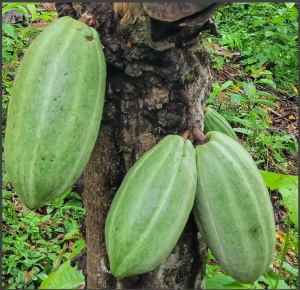
In Marahua, cacao is cultivated within agroforestry systems, often alongside crops and trees such as banana, mango and cedar.
These systems help preserve biodiversity, protect the soil and create a healthier agricultural environment.
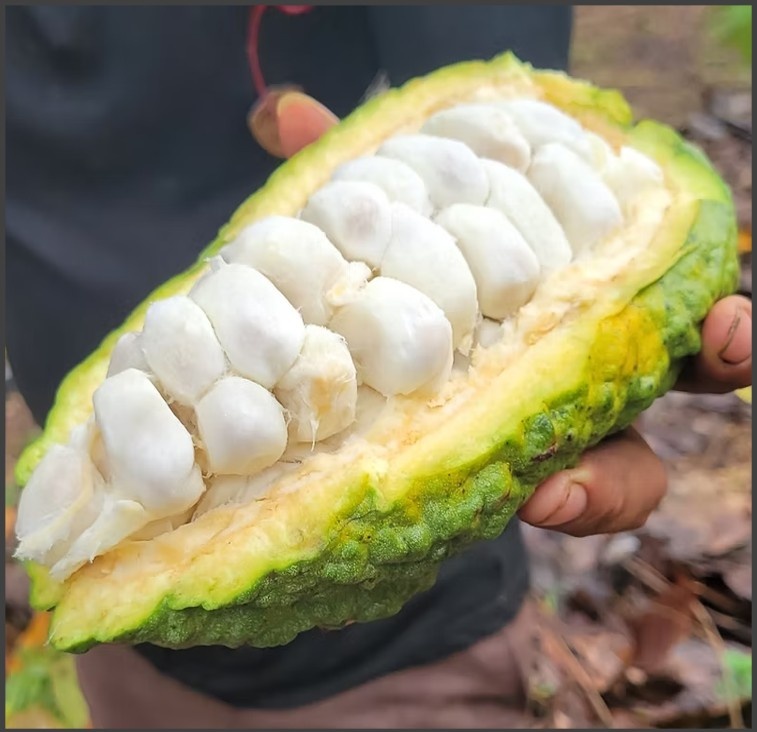
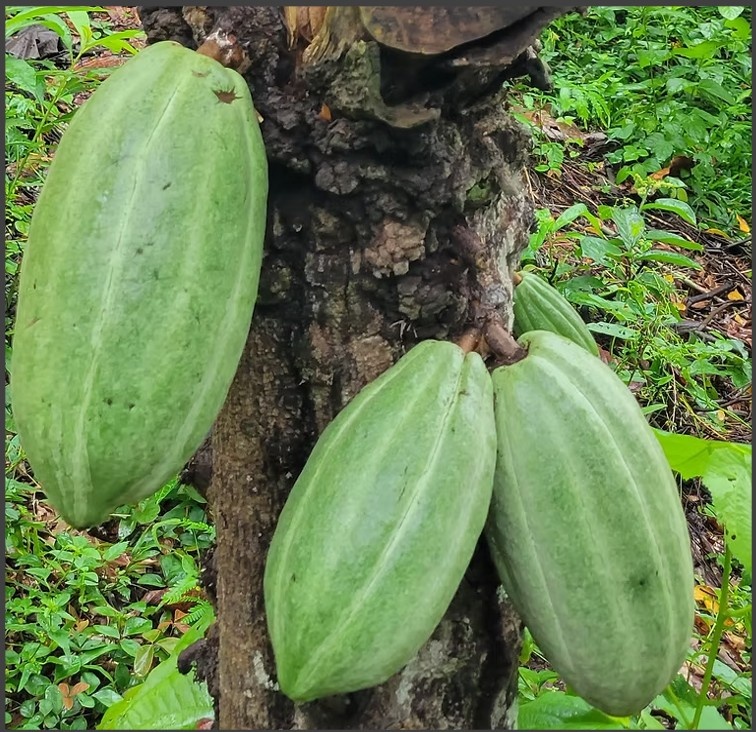
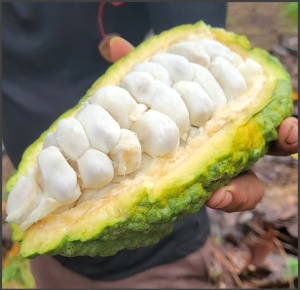
Harvesting is carried out manually, with cacao pods carefully selected at the appropriate stage of ripeness.
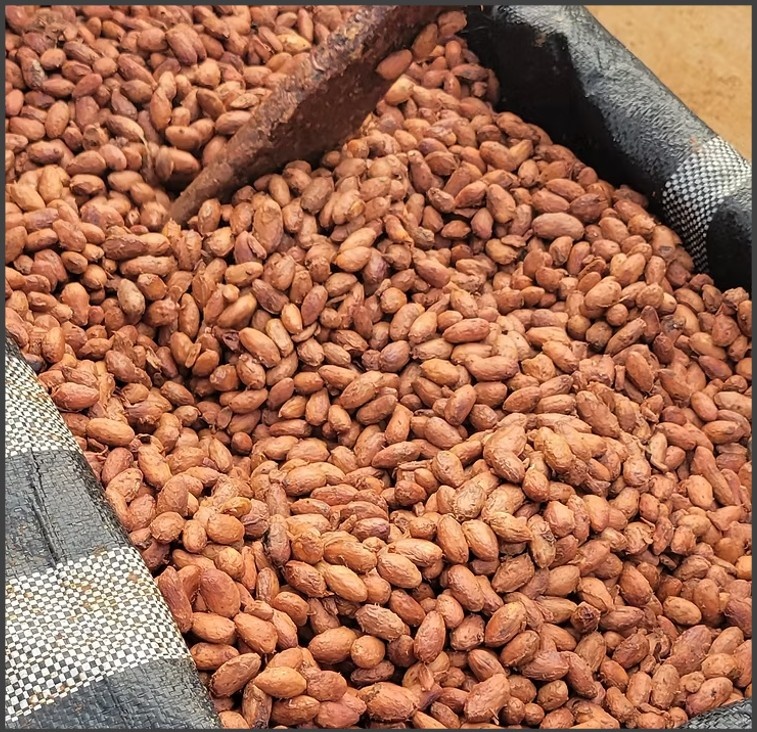
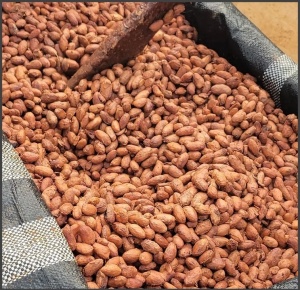
After harvesting, the cacao beans are fermented in wooden boxes for several days and subsequently sun-dried on raised platforms.
These stages are essential to the development of the cacao's final aromatic profile and play a crucial role in transforming the raw beans into high-quality fine cacao.
The Role of Local Cooperatives
Local cooperatives such as Oro Verde and ACOPAGRO play an important role in supporting farmers in the Marahua and wider San Martín region.
They provide farmers with technical training, access to international markets and support with organic and other quality certifications.
Through these initiatives, cacao from San Martín has reached premium chocolate makers and specialty markets in Europe and North America.
Beyond its economic importance, cacao cultivation in Marahua also has a significant social impact.
It has provided communities with a sustainable alternative to illicit agricultural activities, encouraged greater participation of women in agricultural production and helped strengthen local identity around a valuable and respected agricultural tradition.
How to Taste This Chocolate
Take your time and allow the chocolate to melt slowly in your mouth.
As it melts, breathe gently through your nose. A large part of what we perceive as flavor actually comes from our sense of smell, so retronasal breathing plays an essential role in experiencing the full aromatic profile.
Allow the first piece to melt completely before tasting a second one. The second tasting can reveal new layers and allow the more subtle notes to emerge with greater clarity.
Look for the progression from apricot and sour cherry, through honey, almond and creamy whipped-cream textures, toward a bright mandarin finish with delicate hints of nutmeg.
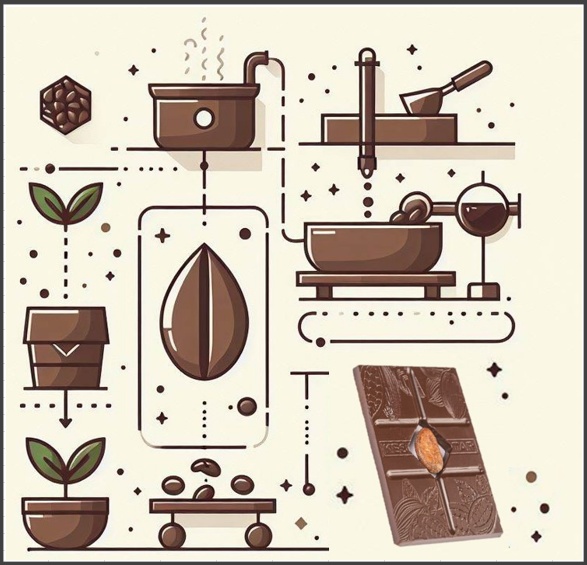
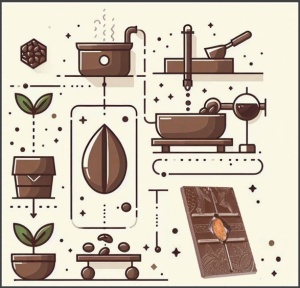
Every bar is a journey from cacao bean to chocolate.
Our chocolates are handcrafted from the processing of the cacao beans all the way through to wrapping, boxing and label production, with every stage carefully handled by hand.