


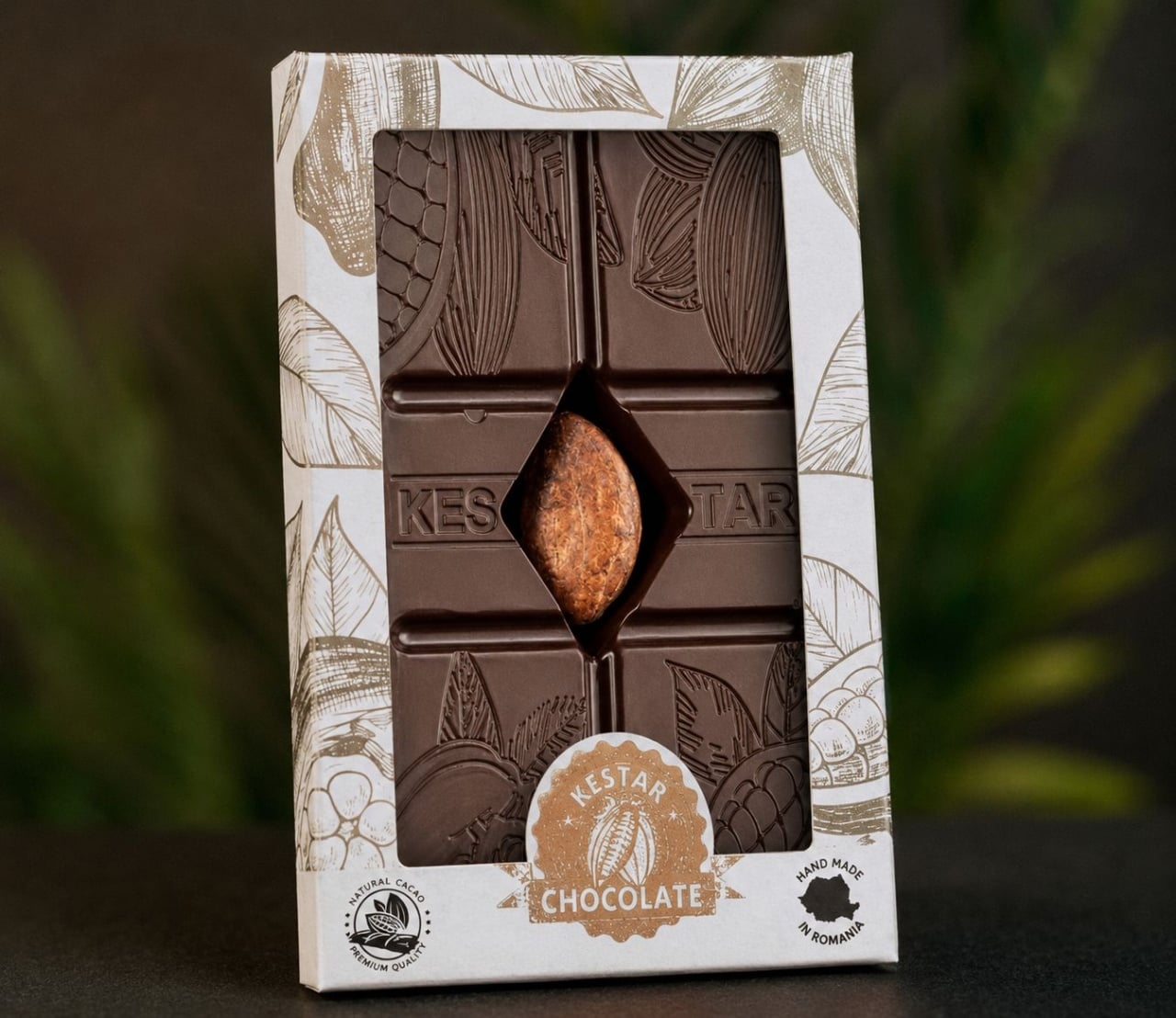
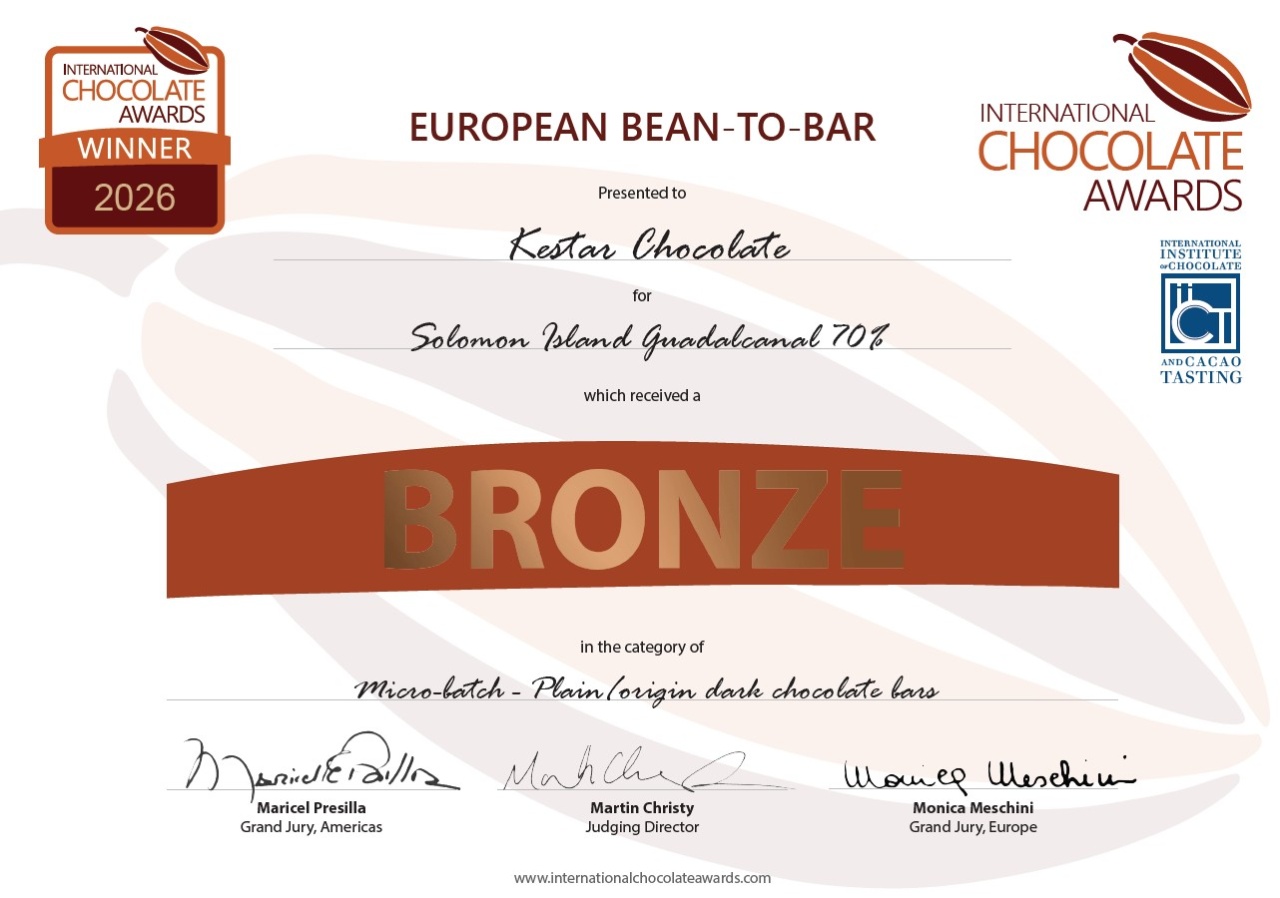
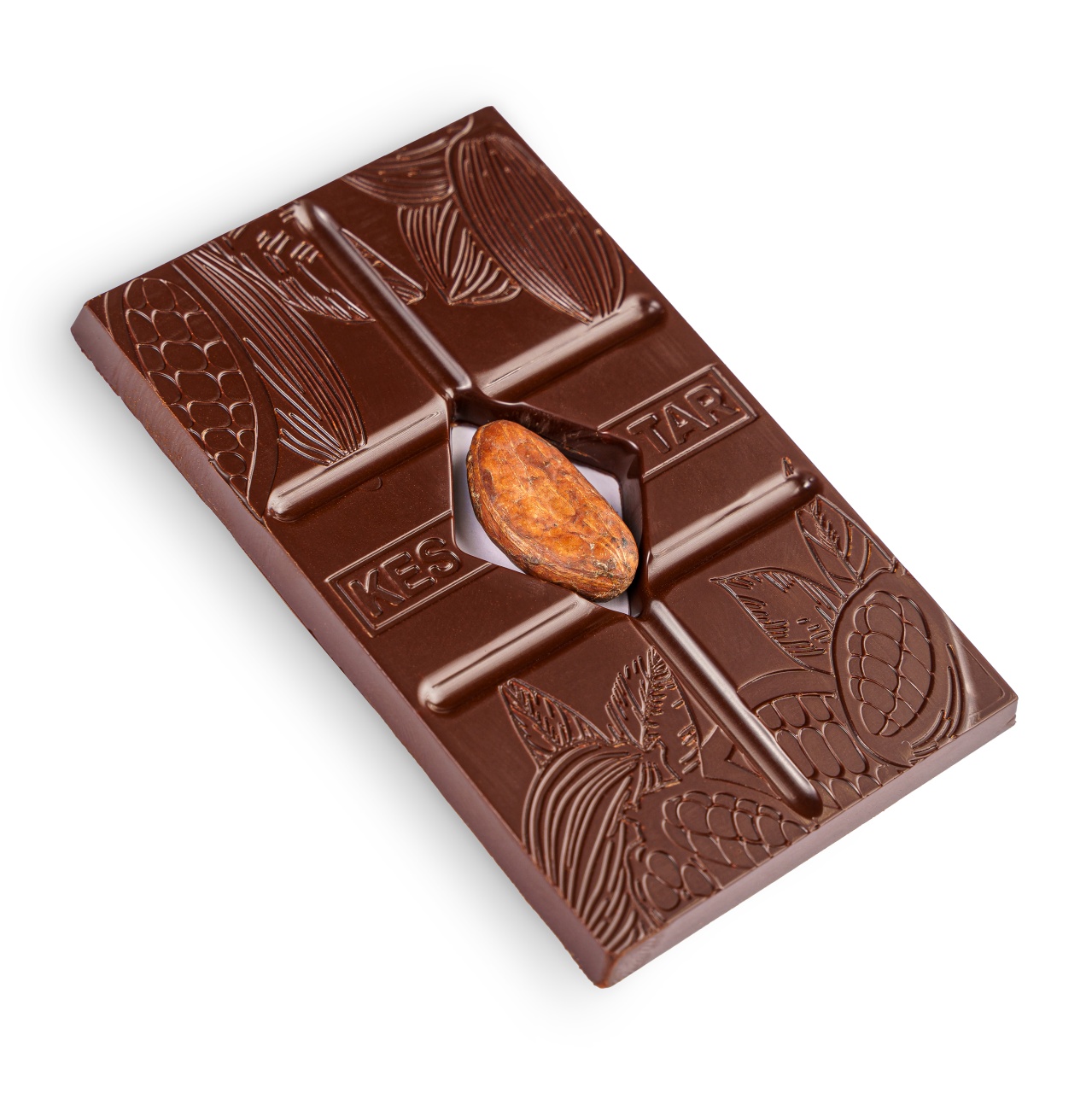
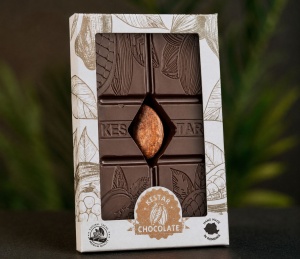
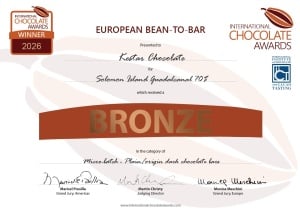
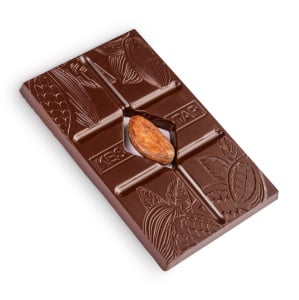
Artisanal Chocolate Bean to Bar - Solomon Islands, Guadalcanal - BRONZE WINNER @chochawards 2026

Description
Aroma Profile
Apricot jam, fresh and juicy red fruits, stone fruits, pomegranate, chocolate mousse, with a sweet and lingering aftertaste.
Bean-to-Bar Chocolate – Solomon Islands, Guadalcanal
Two Ingredients
70% cacao beans from the Solomon Islands, Guadalcanal
30% unrefined granulated coconut flower nectar
Our bean-to-bar chocolate contains no artificial flavours, added cocoa butter, or anything else that could alter the naturally occurring flavours of the cacao beans.
Bean-to-Bar – What Does It Mean?
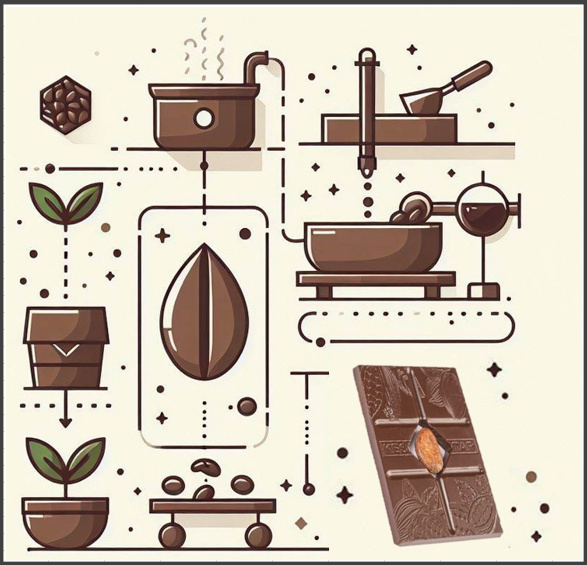
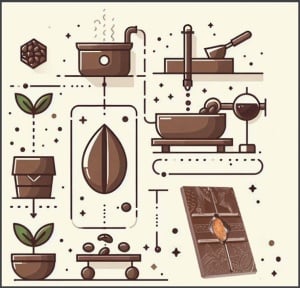
Bean-to-bar chocolate differs from most chocolate on the market because all stages required to transform raw cacao beans into a smooth, delicious chocolate take place in the same facility.
By controlling the roasting process of the raw cacao beans, we can discover and reveal surprising flavour notes.
Origin? We Go All the Way to the Farm!
This chocolate is not simply single origin, made from any cacao beans originating in the Solomon Islands.
The cacao beans are carefully selected and sourced directly from farmers on Guadalcanal Island. We name our chocolates after the specific farms or growing regions where the raw cacao beans come from because transparency regarding the origin of our ingredients is extremely important to us.
Ingredients? Nothing Could Be Simpler!
We were tired of reading novels on nutritional labels, so we decided to use just two ingredients:
- 70% cacao beans originating from the Solomon Islands
- 30% unrefined coconut flower nectar from Indonesia
What does this mean?
It means that all the flavours and tasting notes in this chocolate come exclusively from the cacao bean. During the manufacturing process, every step influences the flavour of the finished product, so we have developed and perfected unique profiles for each origin to highlight the extraordinary flavours already present in the cacao bean.
Unrefined Coconut Flower Nectar
The granulated coconut flower nectar is unrefined and contains no unwanted additives.
It is obtained from the sap of coconut palm flowers, which undergoes a heating process that evaporates the water, leaving behind a solid mass.
The final product is brown and granulated, similar to raw cane sugar, but with a lower glycemic index than many common sweeteners.
Fun Fact
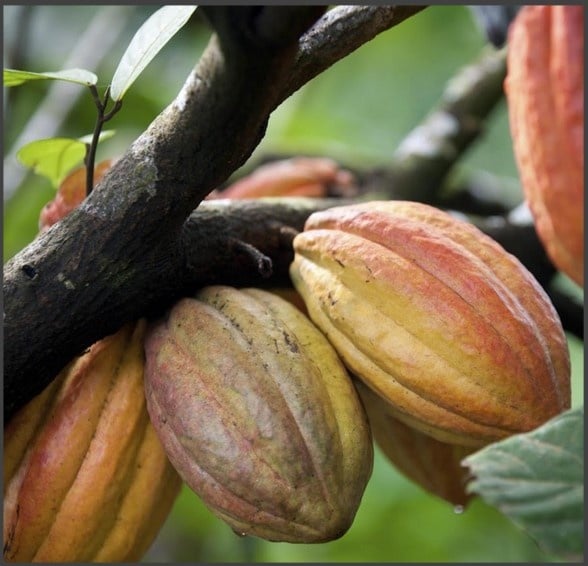
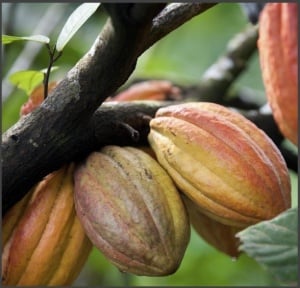
The Latin name of the cacao tree, Theobroma cacao, translates as “food of the gods.”
Roasting Cacao Beans: A Sensory Science
When chocolate making is at its finest, the chemistry that takes place during cacao roasting can be experienced through all five senses.
Raw cacao beans begin with an astringent, often unpleasant flavour, with bitter and nutty notes resulting from volatile acids created during fermentation.
But everything changes once the cacao beans are roasted.
The Maillard reaction takes place as amino acids and natural sugars react and transform into a range of new aromatic compounds, deepening and evening out the rich brown colour the beans developed during fermentation. At the same time, the sharp smell of boiling vinegar gives way to the first delightful hints of that familiar aroma of warm chocolate.
As the temperature rises further — snap! — excess moisture evaporates from the surface of the cacao beans with a series of satisfying cracks, indicating that they are nearly ready to be removed from the heat.
Once the artisan chocolatier is satisfied with the roast, the reaction must be stopped quickly by cooling the beans to room temperature. Cooling racks, fans and air conditioning are often used to achieve the best results.
Once cool enough to handle, the whole beans should be sufficiently brittle for the outer shells to separate easily, revealing the precious cacao nib inside.
And then comes the ultimate test: tasting. Some chocolate makers take the opportunity to check their creation themselves, enjoying a piece or two — one of the perks of the job!
Discovering the Perfect Roast
There is no single way to roast cacao beans.
While mass-market chocolate manufacturers tend to use a one-size-fits-all approach, artisan chocolatiers know better: no two batches of beans are exactly alike, so the roasting process shouldn't be either.
An artisan chocolate maker will adapt the roasting approach according to the particular batch of beans, taking into account their variety and origin, estimating moisture levels, removing damaged beans and sorting them by size to achieve an even roast and optimal flavour development.
They must also decide whether to remove the cacao nib from the shell before or after roasting. While large-scale manufacturers often roast only the nib, artisan chocolate makers more commonly roast the whole bean, allowing the nib to absorb more of the aromas from the surrounding shell.
A “perfect” roast can be achieved using a variety of heat sources, including ovens, drum roasters, stovetop pans, hot-air guns and even coffee roasters. Some methods, such as drum roasting, can provide greater consistency, but in the right hands, there is no single best piece of equipment.
ABOUT THE FARM
Indigenous farmers on Guadalcanal Island make full use of the region's tropical climate and fertile volcanic soil, growing cacao alongside native coconut palms, root vegetables and hardwood trees.
They are adapting to the challenges posed by climate change, being among the first communities to experience its consequences as island populations. They are working to make the best possible use of their resources while ensuring sustainable agriculture.
ABOUT OUR PARTNERSHIP
Our local partner, Cathiro Commodities Development Ltd., leads efforts to create greater economic opportunities for indigenous farmers in the Solomon Islands.
Through initiatives addressing local deforestation and supporting agroforestry projects focused on cacao cultivation, farmers are empowered to maintain viable farm ecosystems while simultaneously promoting biodiversity throughout the region.
Cacao Specifications
- Genetics: Amelonado, Criollo, Trinitario, Nacional
- Bean Size: Medium, uniform
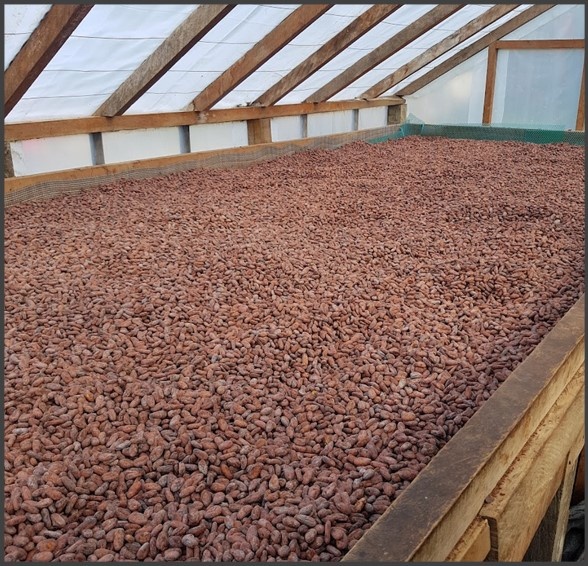
- Fermentation: Centralized fermentation, wooden boxes
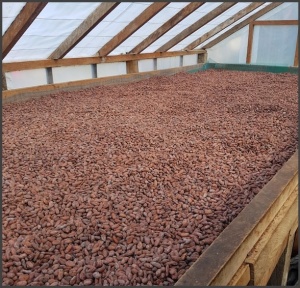
- Drying: Open sun drying or UV-rated plastic
- Sorting: Manual
- Certification: Conventional
- Harvest Season: Year-round, with peak harvest from April to August
How to Taste It
Let the chocolate melt slowly in your mouth and remember to breathe: around 20% of flavour perception comes from the tongue, while approximately 80% comes through the nose.
The second bite of chocolate resets the initial flavour perception and allows you to experience the evolving tasting notes with greater clarity.
Our chocolates are handcrafted from cacao bean processing all the way through to wrapping, boxing, labelling and final packaging.