


COLOMBIA Huila Finca El Rosal Washed
Description
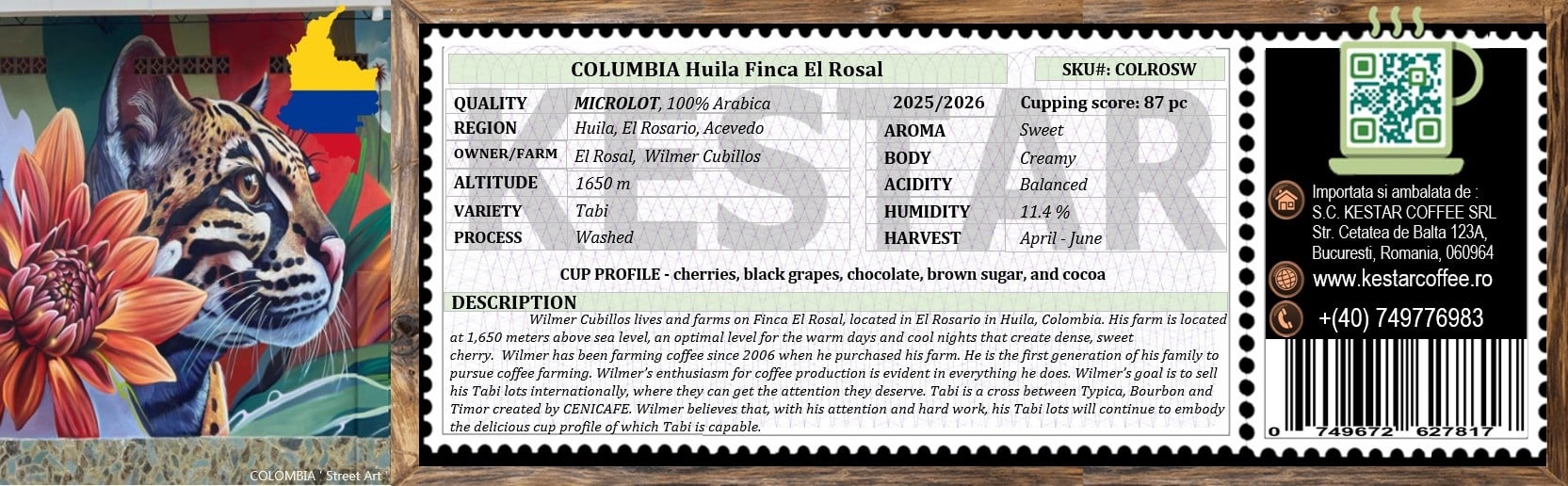
Processing: Washed | SCA Score: 87
Flavor Profile: sweet, with notes of cherries, black grapes, chocolate, brown sugar, and cocoa.
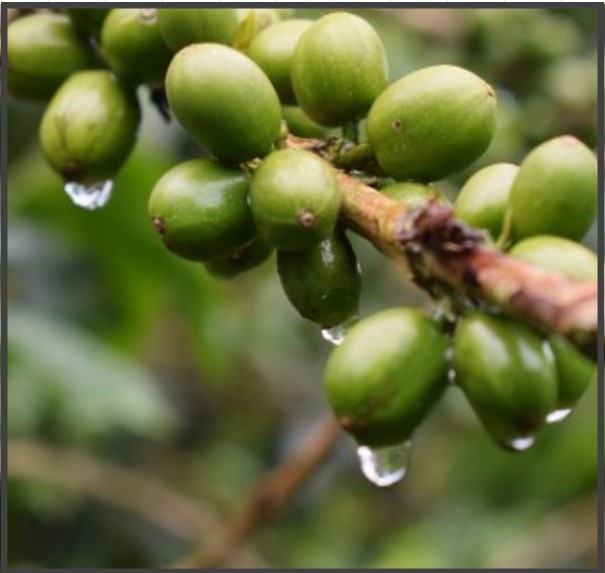
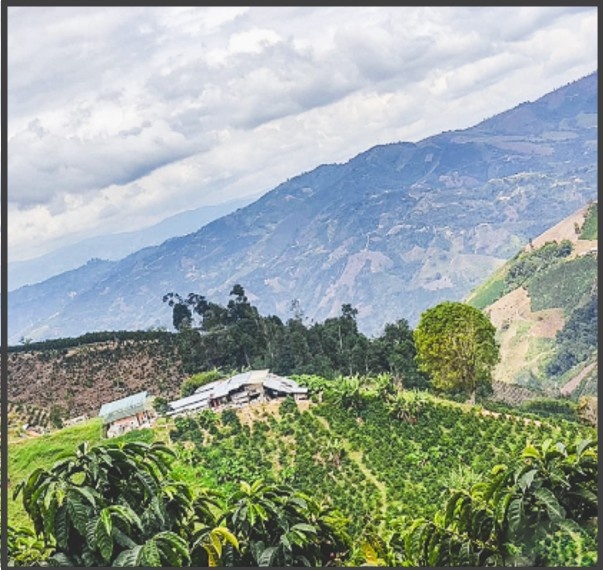
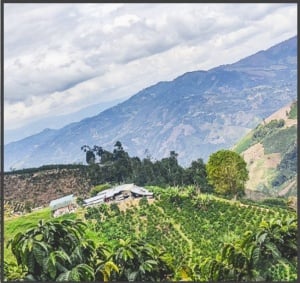
Wilmer Cubillos lives and grows coffee at Finca El Rosal, in the town of El Rosario, Huila, Colombia. His farm is located at an altitude of 1,650 meters, where warm days and cool nights create ideal conditions for the development of dense, intensely sweet coffee cherries.
Since 2006, when he purchased the farm, Wilmer has devoted himself entirely to coffee, becoming the first generation in his family to pursue this path. His passion for coffee production can be seen in every detail of his work. His dream is for his Tabi lots to reach international markets and receive the recognition they deserve.
Wilmer continues to take important steps to improve the quality of his coffee. He has acquired a separation system to help sort the parchment coffee and has lined the fermentation tanks with special panels to ensure that no unwanted flavors are transferred to the coffee during fermentation. In the future, he plans to further improve the drying facilities and build raised drying beds.
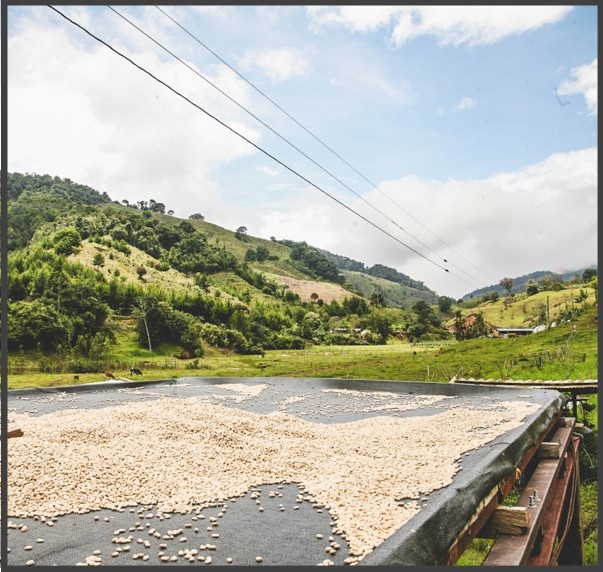
The cherries are fermented for 18 hours in bags, after which they are depulped. The coffee is then placed in a tank and fermented for an additional 6 hours, followed by washing with clean water. The parchment coffee is spread out to dry and raked frequently to ensure even drying.
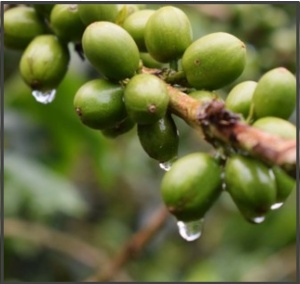
The cherries are carefully hand-picked only when they are perfectly ripe and are processed directly at the farm. Drying takes place under the sun, with frequent raking to ensure uniform and controlled dehydration.
About the Tabi Variety
Tabi is a coffee variety developed by CENICAFÉ through the crossing of Typica, Bourbon, and Timor, and released in 2002.
It combines resistance to coffee leaf rust with the elegance and cup quality traditionally associated with Typica and Bourbon. The plants are tall, with long branches, and produce slightly larger fruits and seeds. The variety adapts particularly well to high altitudes and dense planting, reaching up to 3,000 trees per hectare.
The name “Tabi” comes from the Guambiano language, spoken by an Indigenous Colombian community, and means “good.”