


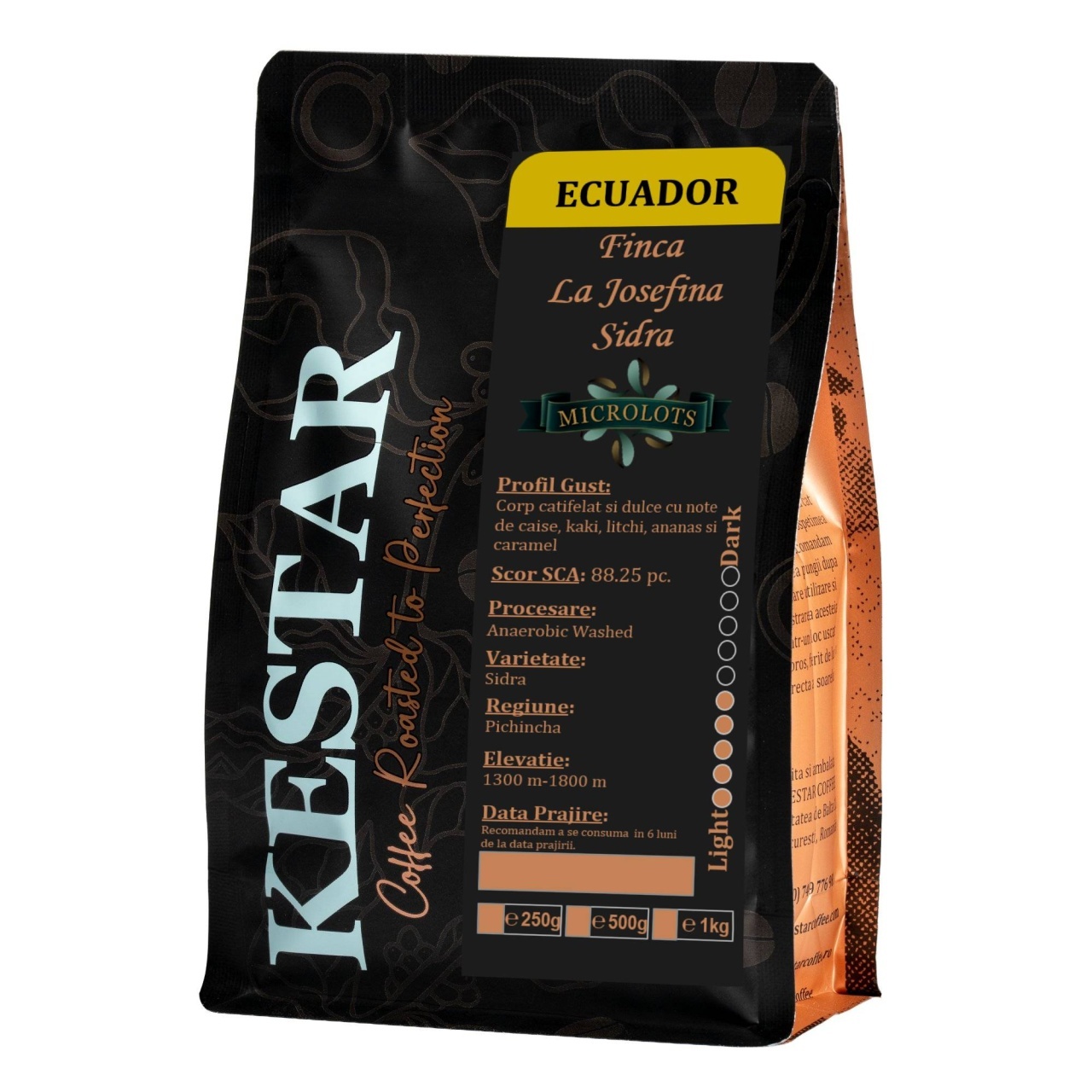
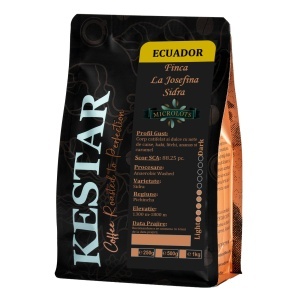
ECUADOR Finca La Josefina Sidra
Description
Roast Profile: Suitable for both Espresso and Filter brewing.
Grind: Whole beans (standard option).
Recommended Resting Time After Roasting:
- Espresso: 10–14 days
- Filter: 7 days
At KESTAR COFFEE, every batch is roasted to order to ensure maximum freshness. Coffee is supplied as whole beans by default and packed in a premium valve bag that allows natural degassing while preserving freshness and aroma.
If you would like your coffee ground, simply leave a note in the Order Comments section before completing your purchase. Please specify your preferred brewing method, such as espresso, filter, moka pot, French press, Turkish coffee, or any other preparation method, and we will grind it accordingly.

Processing: Anaerobic Washed; SCA Score: 88.25 points
Flavor Profile: Sweet notes of apricot, persimmon, lychee, pineapple, and caramel.
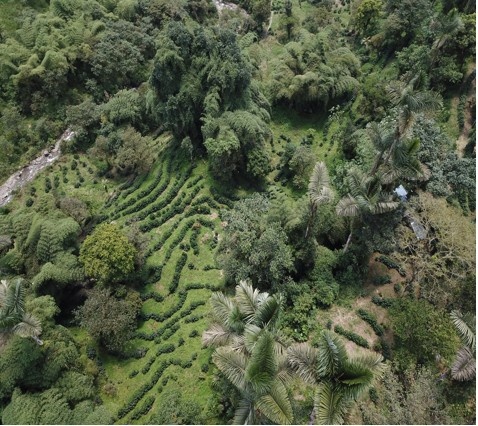
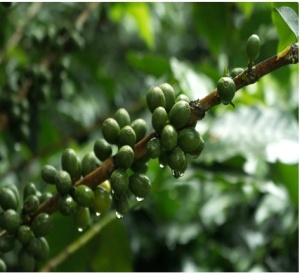
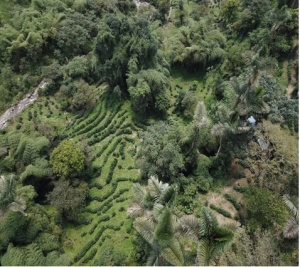
Pichincha, located in the highlands of the northern Andean plateau, is known for its cool climate, its two volcanoes, and its rose farms. Although the altitude is relatively lower compared to other Andean regions, the average temperature is around 18°C, and in the afternoons the land is often covered by mist, creating what are known as cloud forests. This climate provides coffee plants with comfortable daytime conditions, while the cooler nights create mild stress that encourages the plants to produce higher levels of sugars within each cherry.
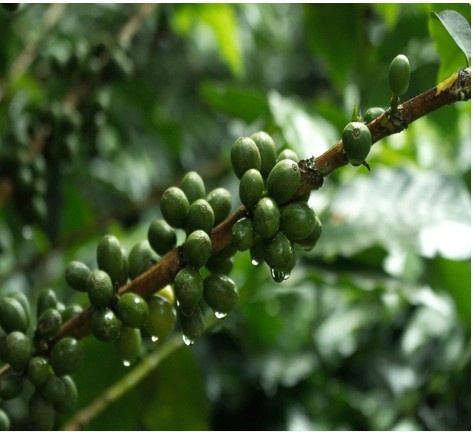
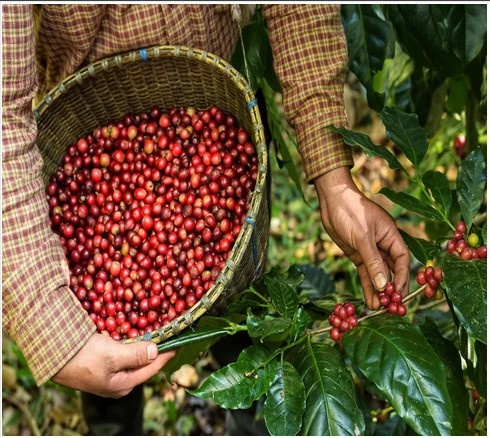
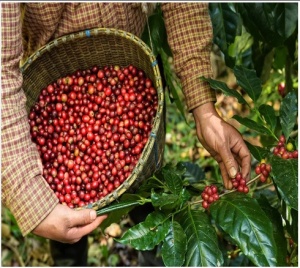
La Josefina Farm is part of the new generation of Ecuadorian producers who have transformed the Pichincha region into a reference point for experimental coffees and exceptional-quality lots. Here, local agricultural traditions are combined with contemporary techniques, and each harvest is handled with precision, from selective hand-picking to controlled anaerobic fermentation. This approach gives the coffee a distinct, clean, and expressive character that captures the essence of a farm dedicated to excellence.
At the beginning of the 2010s, Ligia Merizalde and Leopoldo Andrade decided to radically change their life path and invest in themselves, their community, and two plots of land with exceptional potential for coffee cultivation, located in the Cascabel Valley on the edge of the Amazon region. This transition was not simply a career change, but a lifestyle choice. Together with a large team of local workers, they built La Josefina into a space for learning, experimentation, and continuous development. Over time, they became recognized for their controlled fermentations, cultivation of rare varieties, and meticulous approach to coffee processing.