


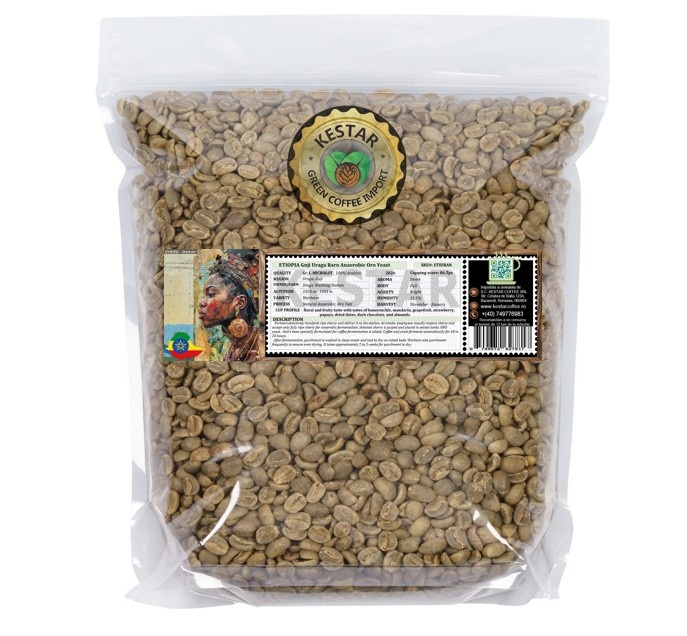
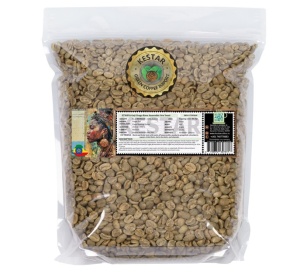
ETHIOPIA Guji Uraga RARO Anaerobic Natural Oro Yeast Gr 1

Description

PROCESSING: Natural Anaerobic ORO Yeast; SCA Score: 86.5 points
Floral and fruity profile with notes of honeysuckle, mandarin, grapefruit, strawberry, papaya, dried dates, dark chocolate, and almonds.
The Uraga Washing Station receives coffee cherries from farmers in the surrounding region. The station is located in Guji, one of Ethiopia’s important coffee-producing regions. In the past, Guji was part of the Yirgacheffe region, but its distinct microclimate produces coffees with such a unique character that the area was later recognized as a separate coffee-growing region.
Farming methods in the region have remained largely traditional. Farmers in Guji usually grow coffee plants alongside food crops in an intercropping system. This practice is common among smallholder producers because it allows them to make efficient use of their land while also providing food for their families.
In addition to the traditional intercropping system, most farms are naturally grown using organic farming practices. Farmers in Guji use very little fertilizer or pesticides, and in many cases, none at all. Most agricultural activities are carried out manually by family members.
To make the most of the region’s exceptional climatic conditions, the Uraga Washing Station provides farmers with training focused on improving cherry quality. The training program focuses particularly on proper harvesting and transportation techniques, ensuring that the cherries arrive at the station in the best possible condition.
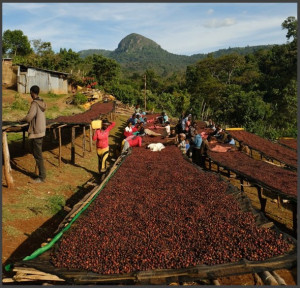
Farmers handpick and selectively harvest only ripe cherries, which they deliver to the processing station. Upon arrival, the employees visually inspect the cherries and accept only fully ripe fruit for anaerobic fermentation.
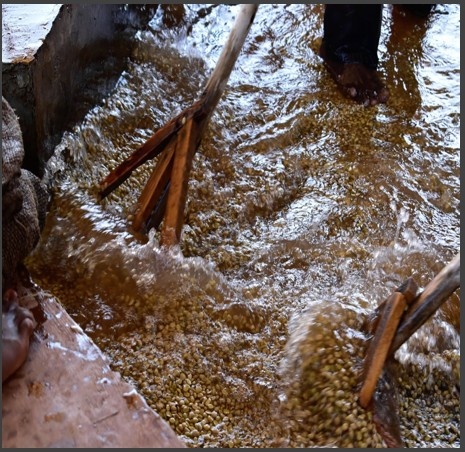
The selected cherries are depulped, and the parchment coffee is placed into airtight fermentation tanks. ORO yeast, a specially formulated culture for coffee fermentation, is added. The coffee and yeast ferment in an anaerobic, oxygen-free environment for approximately 18–24 hours.
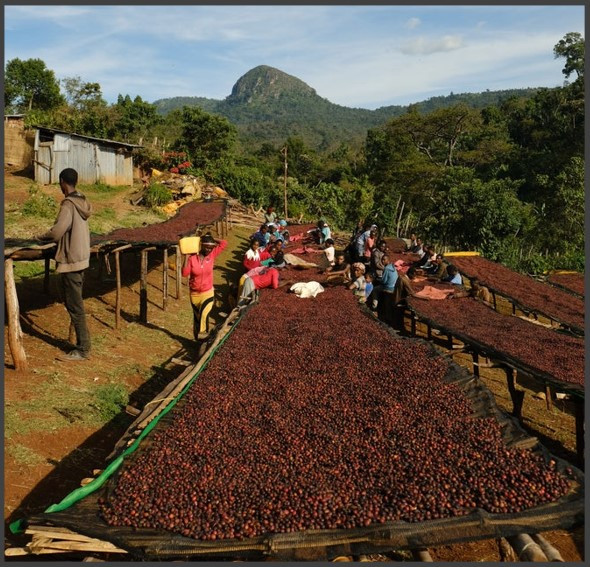
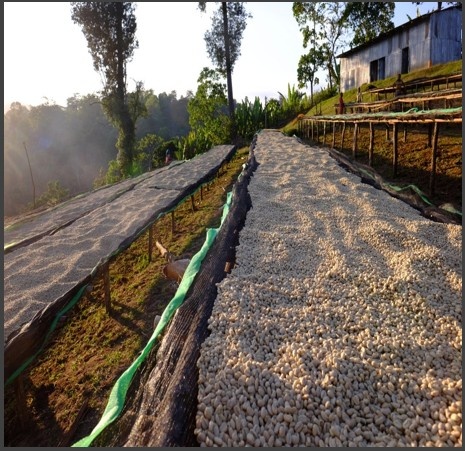
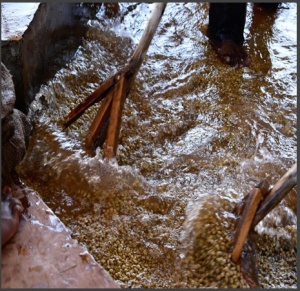
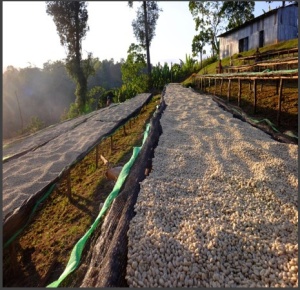
Once fermentation is complete, the parchment is washed with clean water and placed on raised drying beds. Employees frequently rake and turn the parchment to ensure even drying. The drying process generally takes approximately 2–3 weeks.
In Ethiopia, coffee is graded based on both visual defect assessment and cup quality. Grade 1 (Grade 1) is considered the highest level of quality.
Grades 1 and 2 are classified as specialty coffee, while grades 3–9 are categorized as commercial coffee. To receive Grade 1, the coffee must be free from defects or unpleasant flavors in the cup and must not contain quakers — underdeveloped or underripe beans that can produce undesirable flavors during roasting.