


JAMAICA Blue Mountain - MICROLOT
Description
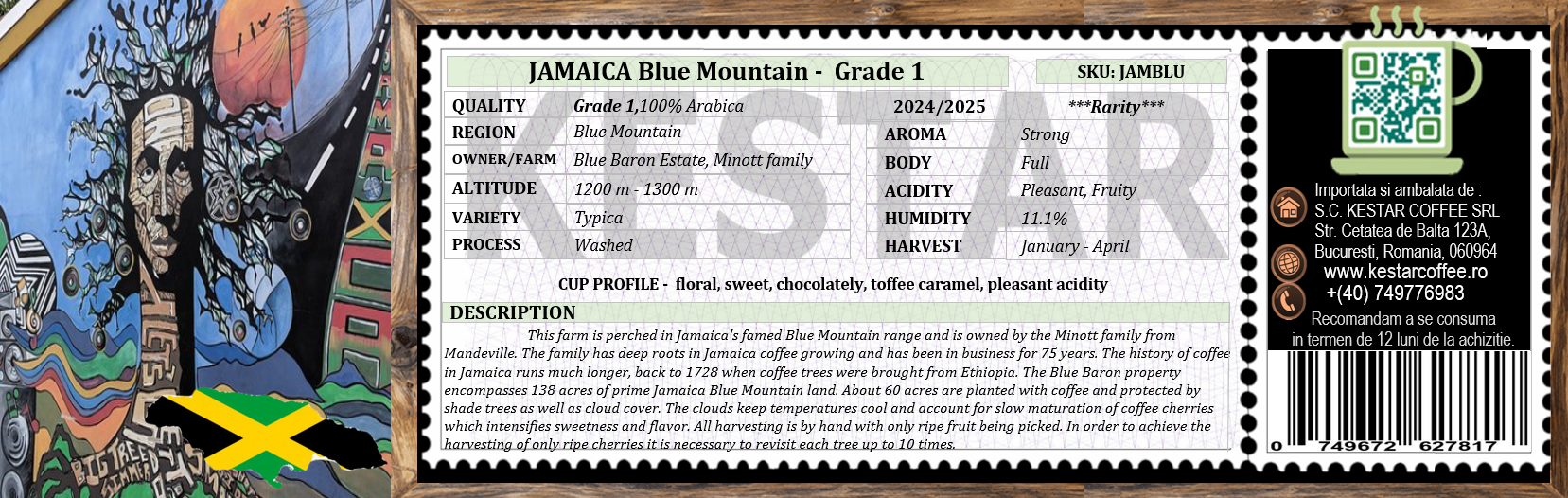
Processing: Washed Flavor Profile: Floral notes, chocolate fudge with caramel toffee, pleasant fruity acidity
The 400-hectare farm named "Jah B Estate" is located on the picturesque slopes of the famous Blue Mountains near St. Thomas and has an extraordinary history to tell. While other farms established themselves in regions with a long-standing family coffee tradition to look back on and an established reputation, Jah B Estate's dedication to professional coffee cultivation is relatively recent. The estate's farmer, named "Jah B" himself, inherited an uncle's farm in 2010, not knowing where his efforts would lead.
With the support and intensive pioneering work carried out over three years by two ambitious young men from Germany, it became possible in 2014 for Jah B's coffee to finally find its way beyond Jamaica's borders.
The name Jah B reflects the owner's belief in the Afro-Caribbean spirituality of the Rastafari movement. The name originates from Ras Tafari—"Ras" being an Ethiopian title equivalent to prince, and Tafari Makonnen being the given name of Haile Selassie I before his coronation. "Jah" is a biblical name of God, which is why many followers of the Rastafari movement consider Haile Selassie to be Jah Rastafari, the Messiah.
In everyday life, based largely on Hebrew dietary laws, Rastafari followers avoid chemically modified foods or those containing artificial additives. As a staunch supporter of this life philosophy, Jah B applies the same principles to the cultivation of his coffee, completely forgoing the use of pesticides and chemical fertilizers. Living largely off what he grows on his own land, Jah B plants, alongside coffee, bananas, limes, mangoes, ackee, breadfruit, avocados, and jackfruit. The coffee plants grow without artificial shade, yet benefit from the cool, cloudy, and often foggy climate created by the nearby forest, which provides ideal natural conditions for their development.
Details
What customers are saying
Indeed Jamaica may not have the wow effect. I can name a few coffees that are more affordable and surprinsingly better. It also does not have some special processing method, simply washed.
The reason Jamaica costs that high is because of the limited area of growth. The crops are small, giving a limited edition coffee and the price to match.