


KENYA Kirinyaga KII AB
Description

Processing: Washed
SCA Score: 88 points
Flavor Profile: Fruity notes of cranberry and lemon, balanced by caramel sweetness, milk chocolate, and honey.
Kirinyaga County is located on the southern slopes of Mount Kenya, about 112 km from Nairobi. The region is widely recognized for producing high-quality coffees. Sucafina works with many farmers and cooperatives in the area, supporting them through improvements in processing capacity, access to agricultural inputs, and better farming practices.
The name Kirinyaga comes from the local name for Mount Kenya and means "white ridge," referring to the mountain's snow-capped peaks.
Kii Factory, owned and operated by Rungeto Farmers Cooperative Society (FCS), is well known for producing consistently high-quality coffees. Cooperative members grow coffee at elevations between 1,310 and 1,900 meters above sea level, and the factory follows strict sorting and processing procedures to maintain quality throughout production.
Kii is one of three washing stations operated by Rungeto FCS, which has more than 850 members. Built in 1995, the factory is located at the foothills of Mount Kenya. The nearby Kii River provides both the station's name and the clean water used to process its fully washed coffees.
In recent years, significant efforts have been made to further improve quality at Kii. These investments are reflected in the clean, balanced, and well-defined cup profiles for which the factory has become known.
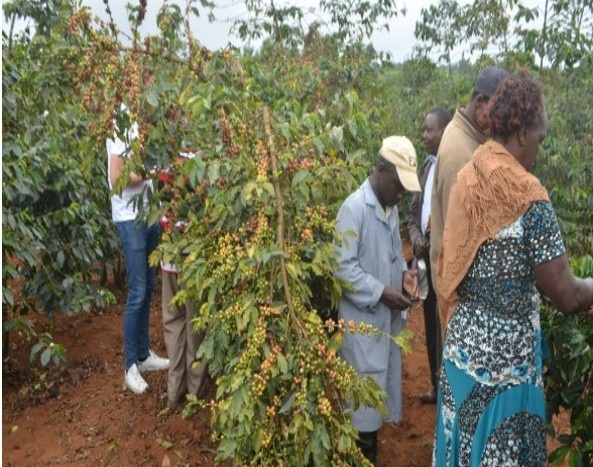
Farmers selectively hand-pick only fully ripe coffee cherries before delivering them to Kii Factory. Upon arrival, every delivery is carefully inspected by the Cherry Clerk, who accepts only dense, fully ripe cherries. This strict selection process is one of the main reasons for the consistently high quality of coffees produced at Kii.
After reception, the cherries are depulped and fermented for approximately 16 to 24 hours, depending on the ambient temperature. The coffee is then washed with clean water from the Kii River and soaked for an additional 12 hours. Modern grading channels help maintain coffee quality during washing, while all wastewater is filtered through soak pits before being safely returned to the local environment.
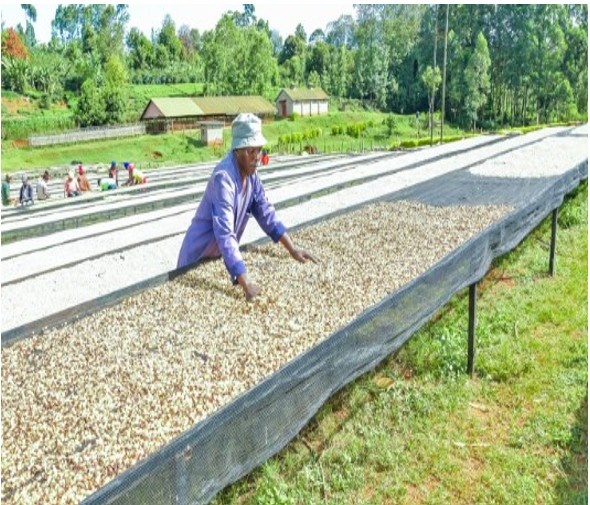
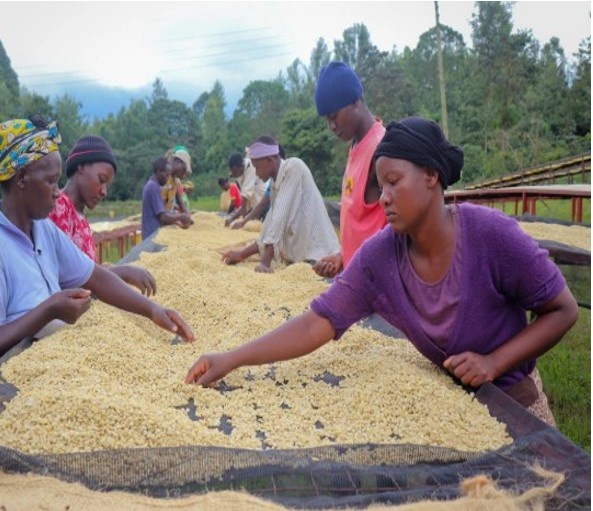
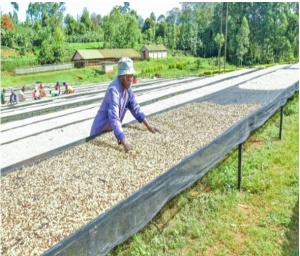
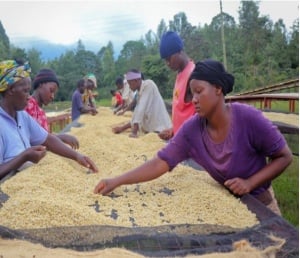
Following washing and grading, the parchment coffee is dried on raised beds for approximately 14 days. During drying, workers regularly turn the coffee to ensure even moisture loss. The parchment is covered during the hottest hours of the day to slow the drying process and protected overnight from moisture.