


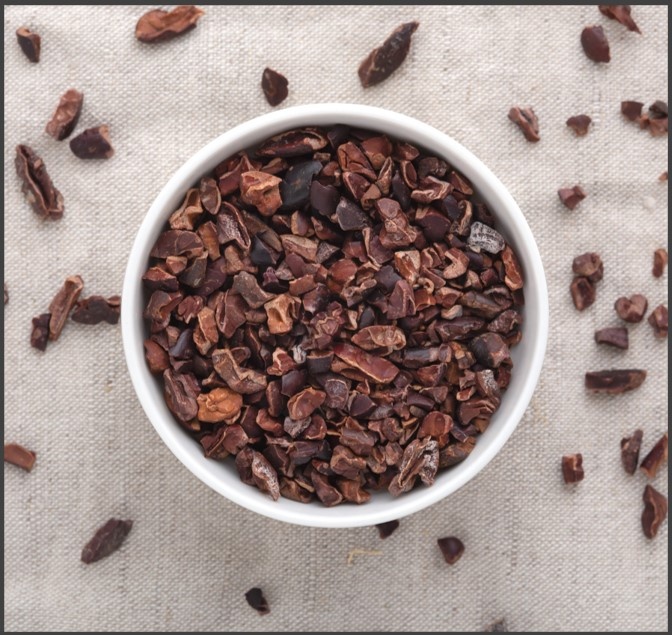
ROASTED COCOA NIBS

Description
Cacao nibs are small pieces of crushed cocoa beans — or chopped cocoa beans — with a rich chocolate aroma.
They are produced from beans derived from the Theobroma cacao tree, also known as the cocoa tree. After harvesting, cocoa beans are dried, then fermented and cracked to produce small, dark pieces known as cocoa nibs.
Some cocoa beans are roasted, while others are not. Unroasted cocoa nibs are known as raw cocoa nibs.
These rich, chocolate-flavored pieces are packed with nutrients and powerful plant compounds that have been shown to provide various health benefits.
Unlike many chocolate products, cocoa nibs are naturally low in sugar. They are also a good source of fiber, protein, and healthy fats — nutrients that help promote feelings of satiety.
They are rich in many minerals, including iron, magnesium, phosphorus, zinc, manganese, and copper. Magnesium is a mineral required for more than 300 different enzymatic reactions in the body, yet it is often lacking in many people's diets.
Phosphorus, magnesium, and manganese are essential for healthy bones, while copper and iron are necessary for the production of red blood cells, which transport oxygen throughout the body.
In addition, cocoa nibs are rich in powerful plant compounds, including antioxidant flavonoids, which have been associated with numerous health benefits.
Cocoa nibs are loaded with antioxidants. These include a class of polyphenol antioxidants called flavonoids, such as epicatechin, catechin, and procyanidins.
In fact, cocoa and chocolate products have one of the highest flavonoid contents by weight among all foods.
Flavonoids are associated with many health benefits. Research suggests that people who consume flavonoid-rich diets may have lower rates of heart disease, certain types of cancer, and cognitive decline.
Due to their high flavonoid content, cocoa nibs and other cocoa products can make a significant contribution to dietary antioxidant intake.
Cocoa nibs and other cocoa products may provide anti-inflammatory effects, support the immune system, and help protect against conditions such as diabetes, heart disease, and certain types of cancer.
Cocoa nibs contain natural stimulants that may cause adverse effects if consumed in excessive amounts. Caution is also advised for pregnant or breastfeeding individuals, or for those who are sensitive or allergic to chocolate.
How to Add Cocoa Nibs to Your Diet
Cocoa nibs contain significantly less sugar than other chocolate products while offering a range of powerful health benefits.
They can easily be incorporated into a variety of sweet and savory recipes.
However, keep in mind that cocoa nibs have a rich flavor and a much more bitter taste than even dark chocolate, as they contain no added sweeteners. For this reason, sweetness may need to be adjusted when replacing regular chocolate with cocoa nibs in recipes.
Here are some ways to add cocoa nibs to your diet:
- Add cocoa nibs to your favorite smoothie, yogurt, or pudding.
- Use them in baked goods such as muffins and bread.
- Mix cocoa nibs with homemade nut butters for a crunchy texture.
- Add them to your morning oatmeal.
- Combine them with nuts and dried fruits for an energy-packed snack.
- Add cocoa nibs to coffee drinks such as lattes and cappuccinos.
- Use them in savory sauces, such as barbecue sauces.
- Coat steak or duck with crushed cocoa nibs for a unique flavor.
- Mix them into hot chocolate or homemade nut milk.
- Combine cocoa nibs with coconut, almond butter, and dates to make healthy energy balls.
- Use them instead of chocolate chips in granola recipes.
- Sprinkle roasted cocoa nibs over yogurt.
As you can see, there are many ways to enjoy cocoa nibs. Experiment with this cocoa product in your kitchen to discover new and delicious uses for this highly nutritious ingredient.
Cocoa nibs are an excellent addition to many dishes, including smoothies, baked goods, meat dishes, and beverages.