


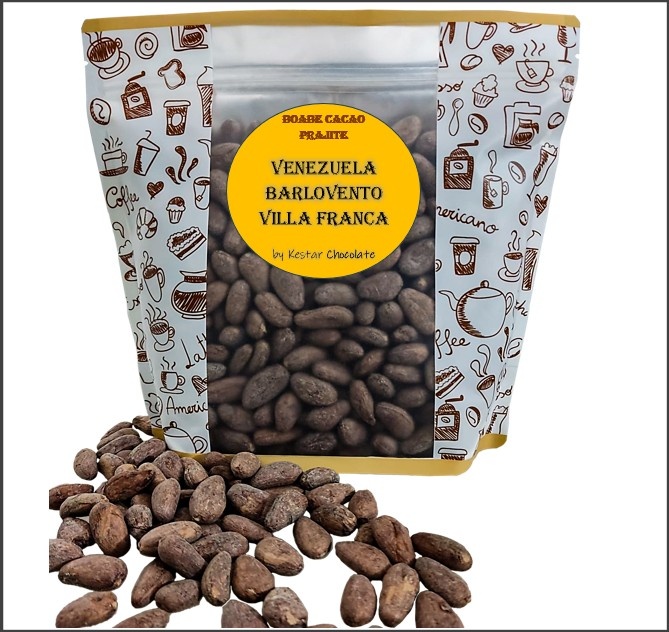
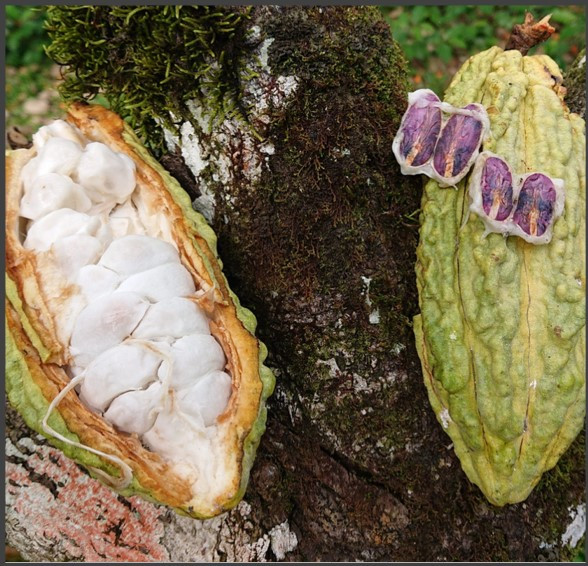
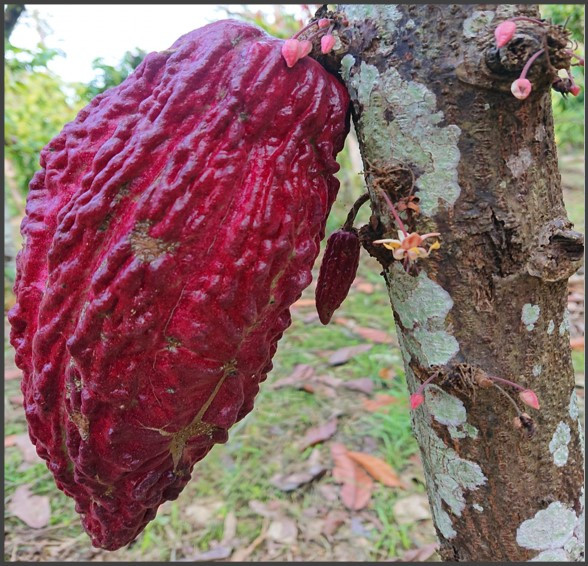

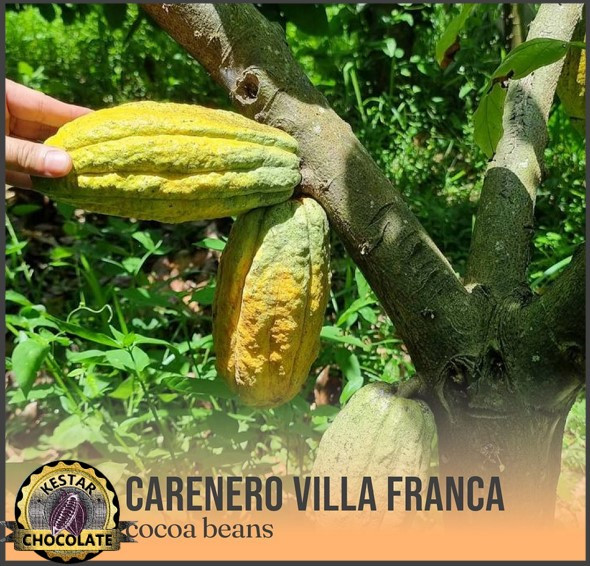
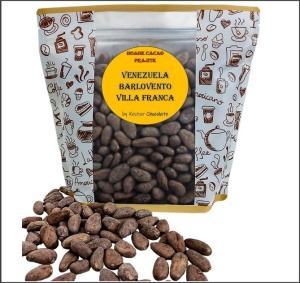

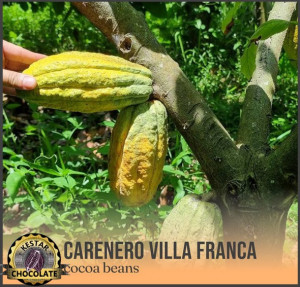
ROASTED COCOA BEANS - VENEZUELA Barlovento Villa Franca

Description
Region: Barlovento
Genetics: Modern Criollo
Flavor Profile: rich cocoa aroma with woody tobacco notes
Fermentation: 98%. Fermented and dried according to a special protocol developed for this type of cocoa. Eight days with strict control of all fermentation and drying conditions. Aged in special wooden boxes for 6 (six) months.
The plantations are located near the village of Yaguapita, Miranda State. The region is located in the central part of the country, near Caracas, and is directly adjacent to the Caribbean Sea.
In addition to a stable warm climate, it is also characterized by very high and sometimes even excessive humidity, which is removed with the help of unique irrigation channels. The local cocoa is a natural hybrid of Criollo and Trinitario.
Barlovento means the wind cycle.
These cocoa beans originate from Barlovento, Venezuela, and the plantations are located near the village of Yaguapita, Miranda.
From a genetic point of view, they belong to Modern Criollo.
The flavor profile is deep, with a rich chocolate aroma and notes of tobacco and wood. The taste is very mild, almost without bitterness or astringency, with a slight acidity.
Here are some ways to add cocoa nibs to your diet:
Throw cocoa nibs into your favorite smoothie.
Use them in baked goods, such as muffins and bread.
Mix cocoa nibs with homemade nut butters.
Add them to your morning oatmeal.
Mix them with nuts and dried fruit for an energy-filled snack.
Add cocoa nibs to coffee drinks, such as lattes and cappuccinos.
Use them in savory sauces, such as barbecue sauces and mole.
Crust steak or duck with crushed cocoa nibs for a unique flavor.
Mix them with hot chocolate or homemade nut milk.
Incorporate cocoa nibs with coconut, almond butter, and dates into a purée to make healthy energy balls.
Use them instead of chocolate chips in granola recipes.
Sprinkle roasted cocoa nibs over yogurt.
As you can see, there are many ways to enjoy cocoa nibs. Try experimenting with this cocoa product in the kitchen to find more unique and delicious uses for this highly nutritious ingredient.
Cocoa beans are an excellent addition to many dishes, including smoothies, baked goods, meat dishes, and beverages.
Roasting cocoa beans: a sensual science
When chocolate craftsmanship is at its best, the chemistry that takes place in roasted cocoa beans can be detected with all five senses.
Unroasted cocoa beans begin with an astringent, often unpleasant taste, with bitter nutty notes from the volatile acids created during fermentation.
But all of this changes once the cocoa beans are roasted!
The Maillard reaction takes place as amino acids and natural sugars react and transform into a range of new, aromatic compounds, visibly deepening and evening out the already rich brown shade that the beans acquired during fermentation. Meanwhile, the sour smell of boiling vinegar is replaced by the first cheerful wafts of that familiar aroma of warmed chocolate.
Things heat up even more and; snap! Excess moisture evaporates, erupting from the surface of the cocoa beans with a series of satisfying crackles, indicating that they are almost ready to be removed.
When the Artisan Chocolatier is satisfied with their work, they must quickly stop the reaction by cooling the beans to room temperature. Cooling racks, fans, and air conditioning are often called upon for the best results.
Once cool enough to handle, the whole beans should be fragile enough to break apart. The outer “shells” should give way easily, revealing the coveted kernel inside.
Then, the ultimate test; taste. Some chocolate makers take the opportunity to check their creation themselves, trying a chocolate or two; the perks of the job!
Discovering the perfect roast.
There is no single way to roast cocoa beans!
While mass-market chocolate manufacturers adopt a one-size-fits-all approach, artisan chocolatiers know better: no two batches of beans are the same, therefore the roasting of the beans should not be either.
An artisan chocolate maker will vary their approach depending on the batch of beans, taking into consideration their type and origin, estimating their moisture level, removing damaged beans, and sorting them by size for even roasting and optimal flavor enhancement.
They must also choose whether to extract the cocoa nib from the shell before or after roasting. While major companies, such as Nestlé and Lindt, choose to roast only the kernel, in artisan chocolate it is more common to find the beans roasted whole, allowing the nibs to absorb more flavor from the surrounding shell.
A “perfect” roast can be achieved using a range of heat sources, including ovens, drum roasters, a pan on the stovetop, hot-air guns, and even coffee roasters. Some methods, such as the drum roaster, can create a more consistent roast, but in the right hands there is no best equipment!
Hello, chocolate lovers! Did you know that one of the most critical steps in the process of making chocolate from cocoa beans is fermentation? And did you know that turning the beans during fermentation is crucial for their quality and flavor?
Here is why: during fermentation, cocoa beans undergo a series of chemical reactions that transform their flavor precursors into the rich and complex flavors we associate with chocolate. However, if the beans remain stagnant or unturned, they can develop unevenly and may even develop mold or unpleasant flavors.
That is where turning comes in. By periodically mixing or turning the beans, fermentation can take place more evenly, which can lead to better and more consistent flavor development. Turning also allows air to circulate, promoting the growth of desirable bacteria and discouraging the growth of harmful ones.